EN17092 motorcycle jeans: why two AA rated pairs aren't equal
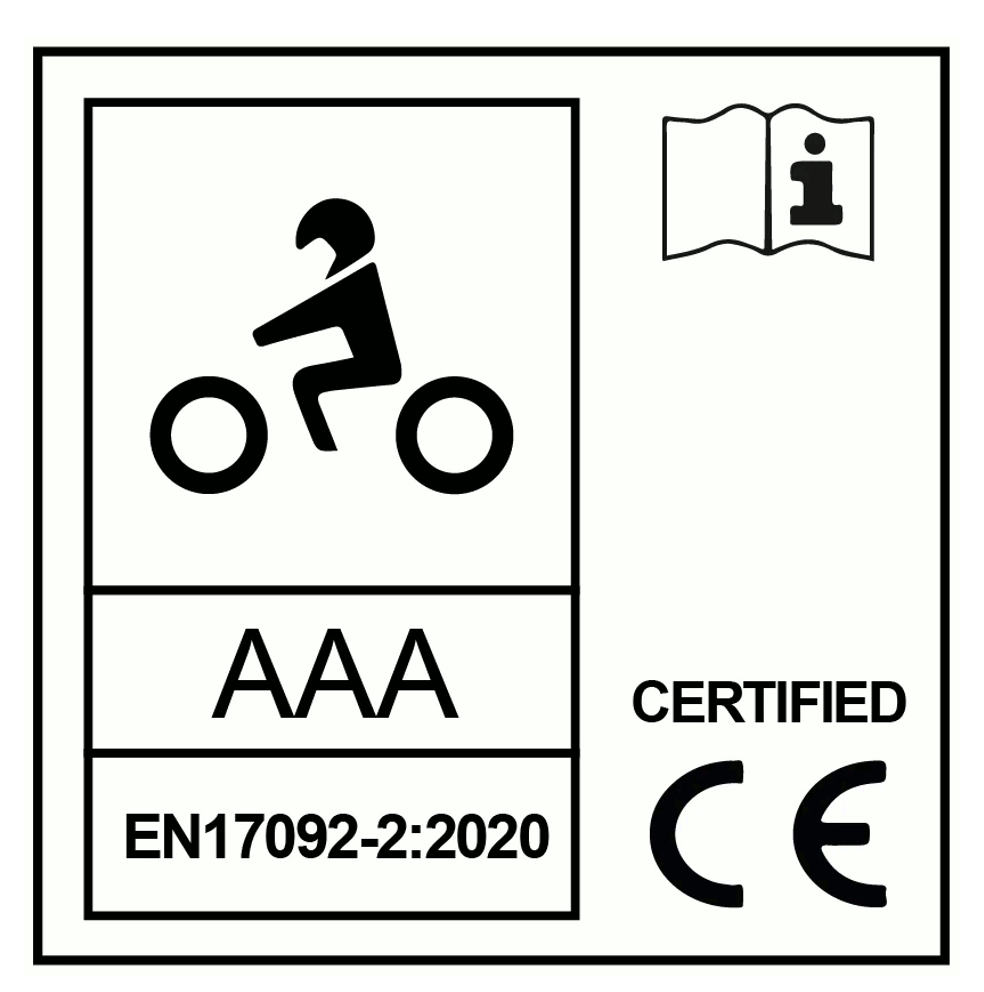
You’ve just bought a pair of CE-certified AA motorcycle jeans. Are you protected? Not necessarily as much as you think. The EN17092 standard, which governs motorcycle protective clothing across Europe, plays a critical role: it sets a minimum resistance threshold below which no garment can be marketed as protective. That’s a genuine step forward for riders. But the standard has a structural limitation: it certifies that a garment reaches a minimum floor of performance, without allowing any meaningful comparison between two products at the same level. The result is that two AA rated motorcycle jeans can offer radically different protection in a real crash. Understanding how EN17092 works and what it doesn’t measure is essential for choosing riding gear that genuinely matches your riding style.
From Cambridge to Darmstadt: 30 years of motorcycle abrasion testing
The test methods used to certify motorcycle clothing are the product of decades of research. In the 1990s, British researcher Roderick Woods developed a machine at the University of Cambridge capable of replicating the abrasion of a crash slide on tarmac.
That protocol became the basis for the first European standard for motorcycle clothing, EN 13595, published in 2002. Originally designed for professional riders, its requirements were so demanding that fewer than 50 mainstream products ever met it making it largely irrelevant for the consumer market.
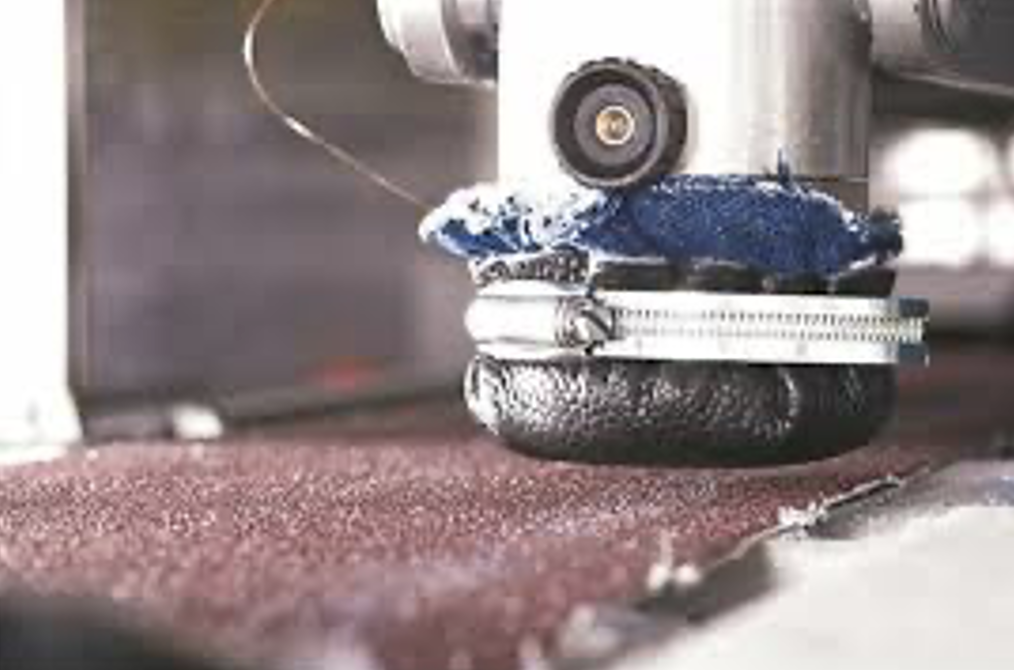
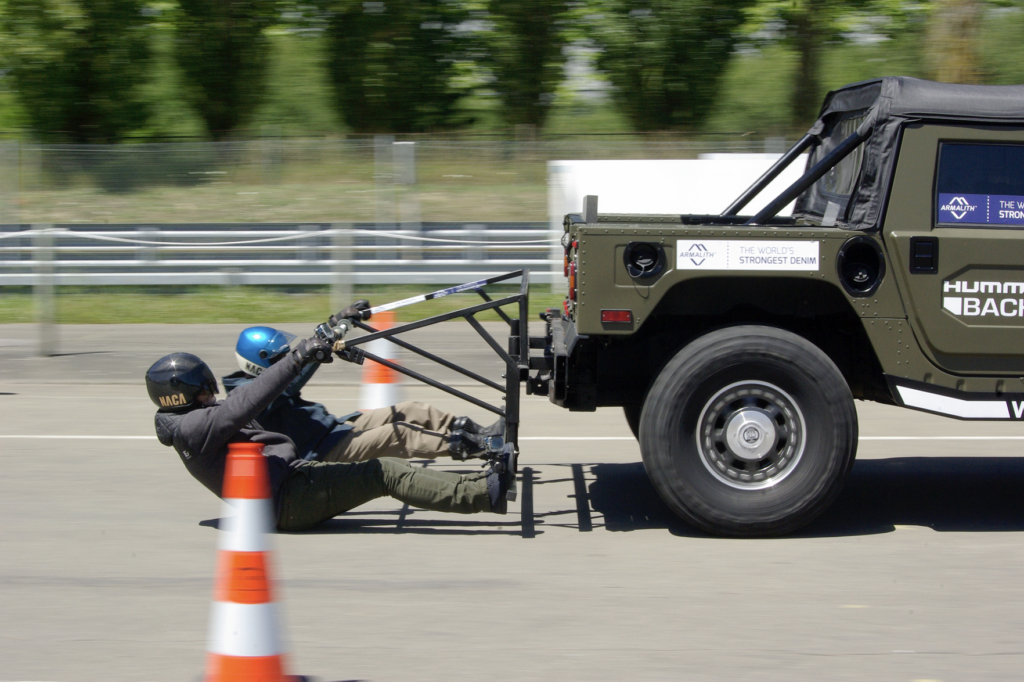
The Cambridge machine reproduced the friction of a gutter on asphalt one of the two tests on which ARMALITH® bases its performance in km/h.
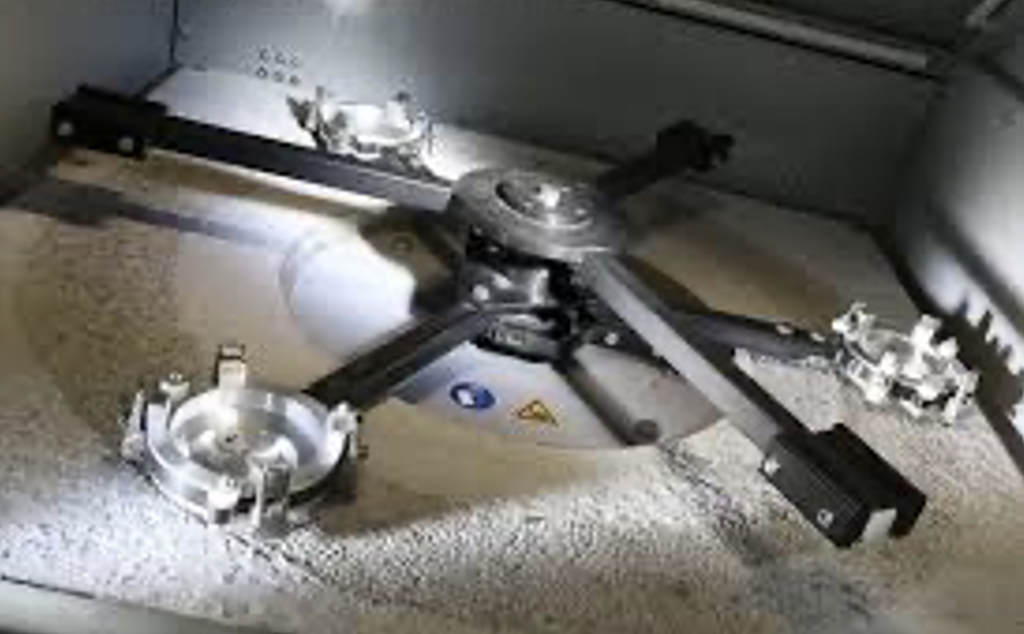
The Darmstadt machine is at the heart of the EN17092 standard it determines whether a motorcycle garment achieves level A, AA or AAA.
In the early 2010s, driven partly by French industry initiatives aimed at adapting the requirements to everyday riders, certification began opening up to a wider range of garments technical textiles, reinforced riding jeans, and more. This evolution led to the current standard, EN 17092, which introduced the A, AA and AAA classes and uses the Darmstadt test machine, better suited to the diversity of modern motorcycle gear.
How the EN17092 standard works for motorcycle clothing
EN17092 is today the reference certification for protective motorcycle apparel in Europe. It classifies garments into three main levels: • Class AAA : The highest level of protection. Designed for high-speed use and track riding. Hard armour at shoulders, elbows, hips and knees is mandatory. • Class AA : The best compromise between protection and everyday comfort. Suited to road use. Same impact protectors as AAA. • Class A : Entry-level protection. Lighter and more comfortable for low-speed urban use. Hip protectors are no longer mandatory in trousers.
The certification applies to the complete garment, not the fabric alone. It assesses several combined criteria: • Abrasion resistance • Tear strength • Seam strength • Garment construction • Integrated impact protectors • Material innocuousness
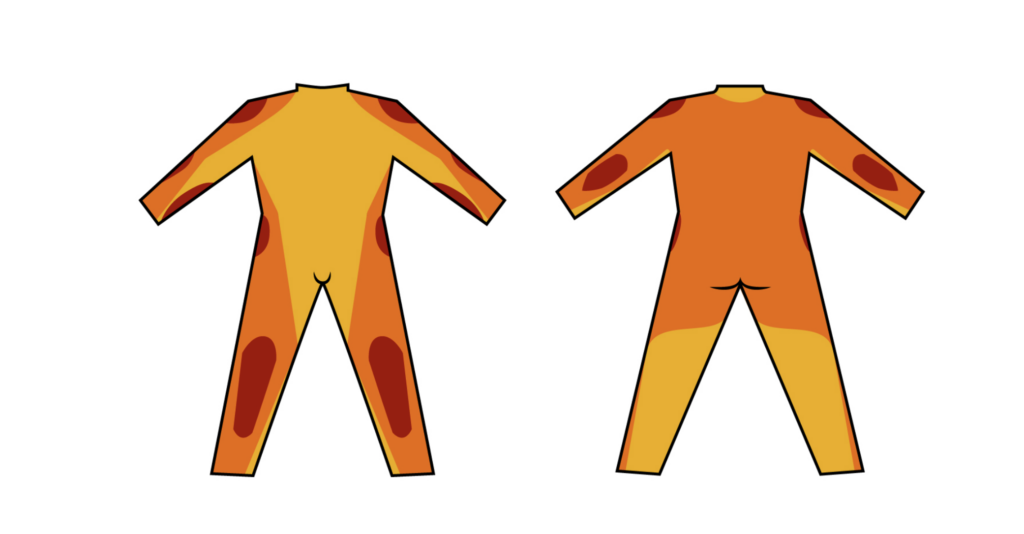
The standard also divides the garment into three risk zones, based on how likely each area is to contact the ground in a crash:
• Zone 1 (red) : primary impact areas: knees, hips, elbows • Zone 2 (orange) : intermediate zones • Zone 3 (yellow) : areas least exposed to abrasion The most demanding requirements apply to Zone 1 the areas statistically most affected in a motorcycle accident.
Why two AA-rated motorcycle jeans don't protect the same way
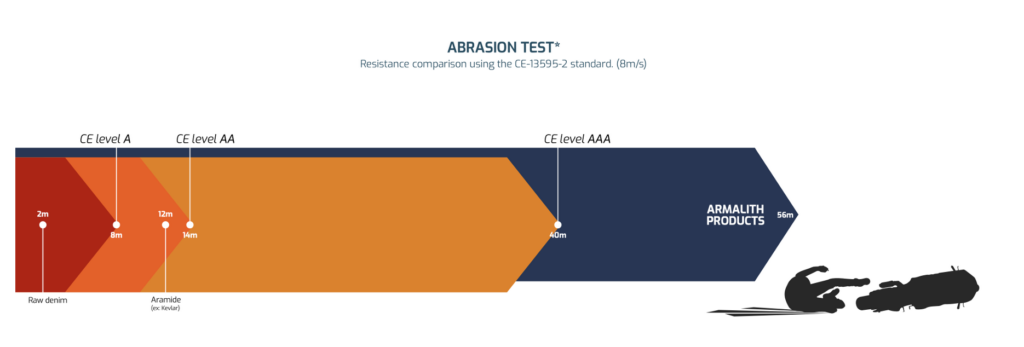
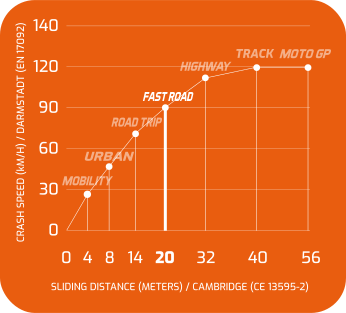
EN17092 defines minimum thresholds of abrasion resistance. In simplified terms, each class corresponds to a reference crash speed: • Class A → abrasion resistance for an impact at 45 km/h (28 mph) • Class AA → abrasion resistance for an impact at 70 km/h (43 mph) • Class AAA → abrasion resistance for an impact at 120 km/h (75 mph)
What most riders don’t realise is that Class AA covers an extremely wide performance range: it starts at 70 km/h and extends all the way to 119 km/h. Two AA-certified garments can therefore offer very different real-world protection. The standard only guarantees that the product exceeds the minimum required. A jean that just clears 70 km/h and one tested to 115 km/h will carry exactly the same AA label.
In practice, this threshold logic shapes how products are designed. When a manufacturer targets AA certification, the rational approach is to meet the required level without significantly exceeding it going well beyond implies more technical material, higher cost, and compromises on weight, stretch or breathability. Since the final label remains identical, there is little commercial incentive to push much further.
Yet from a rider’s perspective, those extra kilometres per hour matter enormously. Since kinetic energy increases with the square of speed, the jump from 70 km/h to 90 or 110 km/h is not a marginal improvement it represents a substantial increase in the abrasion energy and heat generated during a slide. Delivering genuinely superior performance requires far more textile engineering, even though the standard, as it stands, makes that difference invisible to the buyer.
A concrete example: the real gap inside Class AA
Consider three riding jeans, all certified AA under EN17092. The first is engineered to pass the minimum threshold around 70 km/h in abrasion tests. Others may resist 90 km/h or even 110 km/h, while remaining within that same certification class.
The speed gap might seem modest: 90 km/h is +29% above 70 km/h, and 110 km/h is roughly +57%. But crashes don’t work on a linear scale. The energy to be absorbed increases far faster than speed. Between 70 and 90 km/h, the kinetic energy at play is already ~65% higher. Between 70 and 110 km/h, it’s nearly two and a half times greater (+147%).
These aren’t theoretical edge cases they reflect everyday riding speeds. If 70 km/h is the minimum the standard requires, 90 or 110 km/h represent far more realistic crash conditions for a road rider.
This is precisely why ARMALITH® expresses its protection directly in crash speed. In its range, fabrics rated at 70, 90 and 110 km/h can all fall within Class AA yet they represent very different levels of protection. Reading protection in km/h makes visible what the certification label cannot show.
Why ARMALITH rates protection in crash speed (km/h)
At ARMALITH®, we chose to express fabric performance directly in crash speed, rather than certification class alone. This approach is based on recognised abrasion test protocols specifically the Cambridge and Darmstadt tests which establish a direct relationship between speed, slide distance and actual material behaviour.
For example, ARMALITH 90 km/h Fast Road corresponds to resistance over 20 metres of sliding without perforation in the Cambridge test, or full integrity during a standardised 90 km/h motorcycle crash in the Darmstadt test.
Expressing protection in km/h offers three concrete advantages for riders: • It’s immediately understandable no need to decode a certification grid • It differentiates products within the same certification class • It maps directly to the central variable in any crash: the speed at the moment of impact
Leather vs technical textiles: two different approaches to crash protection
Leather remains the historical benchmark for motorcycle protection, particularly in competition. One of its key properties: it generates strong friction during a slide, which reduces the distance covered and therefore the risk of hitting an obstacle.
Leather also has a practical advantage: damage is usually visible after a crash, making it easy to assess whether a suit can be used again.
Some modern technical textiles can outperform leather in terms of strength-to-weight ratio but their internal damage is less visible after a crash. Each material involves different trade-offs depending on the riding context.
Cordura, Kevlar, aramid, UHMWPE: which fibres protect best in riding jeans?
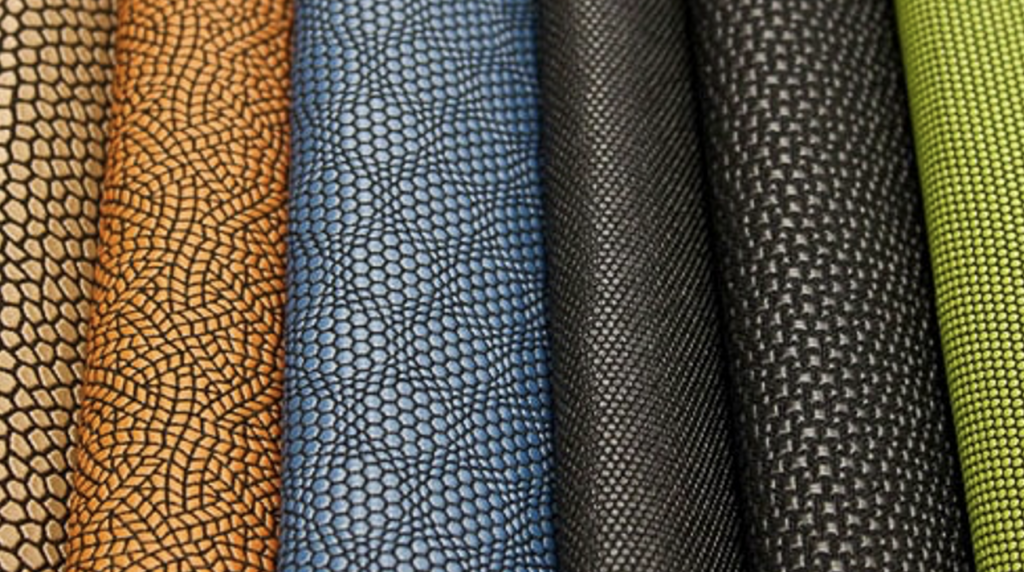
It’s important to distinguish two concepts in protective textiles: fibres and textile architectures. The most common fibres found in CE-certified motorcycle clothing: • Cordura® a high-tenacity nylon 6.6, widely used in riding gear but with limited abrasion performance compared to newer fibres • Aramids (Kevlar®, Twaron®) well known for tear and abrasion resistance, but performance degrades significantly with UV exposure and repeated washing • UHMWPE (ultra-high-molecular-weight polyethylene Dyneema®, Spectra®) currently the highest-performing fibre in terms of strength-to-weight ratio, though technically difficult to process into wearable fabrics Some architectures, such as SuperFabric®, use extremely hard micro-plates that deflect abrasion. They offer excellent abrasion resistance but can be very slippery meaning the crash energy is poorly dissipated, and the rider continues sliding over a greater distance.
Other approaches aim to harness the performance of the strongest fibres while preserving the mechanical behaviour of a true textile. ARMALITH® takes this route: it integrates UHMWPE fibre the highest-performing available into a patented textile architecture. The core technical fibre is encapsulated within a cotton-denim structure, preserving the appearance and comfort of a classic fabric while delivering very high mechanical properties. This construction also addresses several technical challenges inherent to UHMWPE including industrial processing, poor dye adhesion and hydrophobic behaviour through specific low-temperature manufacturing processes.
The parameter EN17092 ignores: skin temperature during abrasion
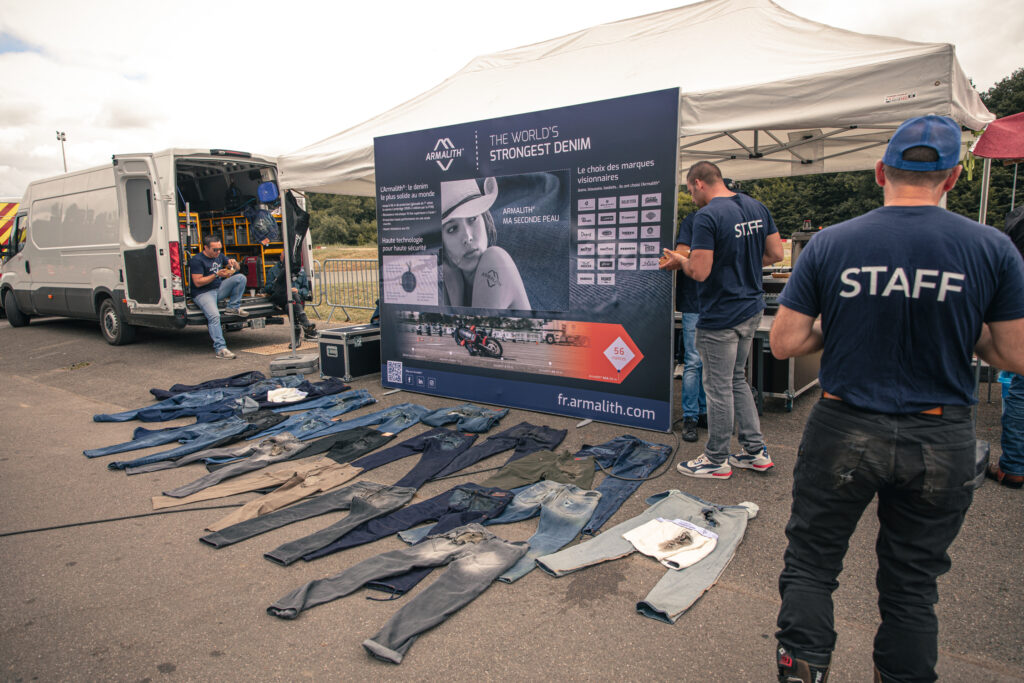
EN17092 essentially checks whether a material perforates or not during abrasion. It does not measure the temperature transmitted to the skin during a slide. During the ARMALITH Test Days, some very thin materials were able to reach abrasion distances corresponding to AAA-level performance while generating skin-contact temperatures above 100°C within the first few metres of sliding. At these thermal levels, second and third-degree burns can occur before the fabric even tears. In some cases, synthetic polymers such as polyamide can also melt at around 260°C, creating micro-droplets capable of penetrating under the epidermis a phenomenon well documented by emergency medical services. Measurements taken during ARMALITH® testing show that at the point of material failure, the maximum recorded skin-contact temperature is 56°C corresponding at worst to a superficial first-degree burn.
Why riding jeans are the hardest protective garment to engineer
Riding jeans are arguably the most technically challenging garment in motorcycle protection. Unlike a jacket or a race suit, they must be worn all day, function as a single layer, remain breathable and comfortable for everyday use on and off the bike.
Yet the legs are among the most exposed areas in a motorcycle accident. The challenge is to simultaneously deliver: • Certified abrasion protection • Thermal comfort and moisture management • Breathability • Stretch and freedom of movement • A low-profile look away from the bike
This is precisely the challenge that drove the development of ARMALITH a fabric engineered from the ground up to solve an equation that conventional materials cannot.
What EN17092 doesn't measure and how ARMALITH addresses it
Motorcycle safety standards play a fundamental role in protecting riders from underperforming gear. But understanding the real protection offered by a riding garment requires going further than the certification label : • The actual slide distance not just the perforation threshold • The crash speed at impact • The temperature generated during abrasion a parameter EN17092 does not measure
These are the parameters on which ARMALITH® is designed, tested and graded. Because between two garments wearing the same AA label, the difference in real-world protection can be considerable.
Your information is processed by computer to allow ARMALITH to manage your request. To exercise your rights in accordance with the law “IT and freedoms”, click here.