
MENU
In the world of high-performance textiles, one name appears consistently: DuPont. This American company is present wherever technical fabrics built from polymers are discussed.
Kevlar, Neoprene, and Teflon were all developed by DuPont engineers. Today, the company employs over 65,000 people across highly diversified sectors from electronics and performance materials to agriculture and nutrition. DuPont gave rise to numerous technologies and subsidiaries, including the Lycra company and its Coolmax® technology.
We have all seen the small Coolmax® label on a garment at some point. But what exactly is this technology? Where does it come from, and what does its industrial future look like? Here is a detailed answer.
DuPont formally known as DuPont de Nemours traces its history to the early 19th century in Delaware. Franco-American chemist Éleuthère Irénée du Pont de Nemours opened a gunpowder manufacturing plant that gradually became the largest industrial chemistry group of its era. DuPont supplied the armed forces during the American Civil War. It also established industrial laboratories focused on cellulose chemistry and lacquers. This research led the company to create its “artificial textiles division” in 1919.
Through ongoing diversification, DuPont developed Teflon in 1938, followed in the 1950s by Dacron, Lycra, Corian, and Orlon and later, Kevlar. Over time, many of these technologies were transferred to other industry players through various transactions and partnerships. Today, the Coolmax® brand belongs to the Lycra company a specialist in nylon fibers and also the owner of the Thermolite® technology.
Lycra has been a subsidiary of Invista currently the world’s leading nylon producer since 2019. The patent underpinning the Coolmax® technology has since entered the public domain.
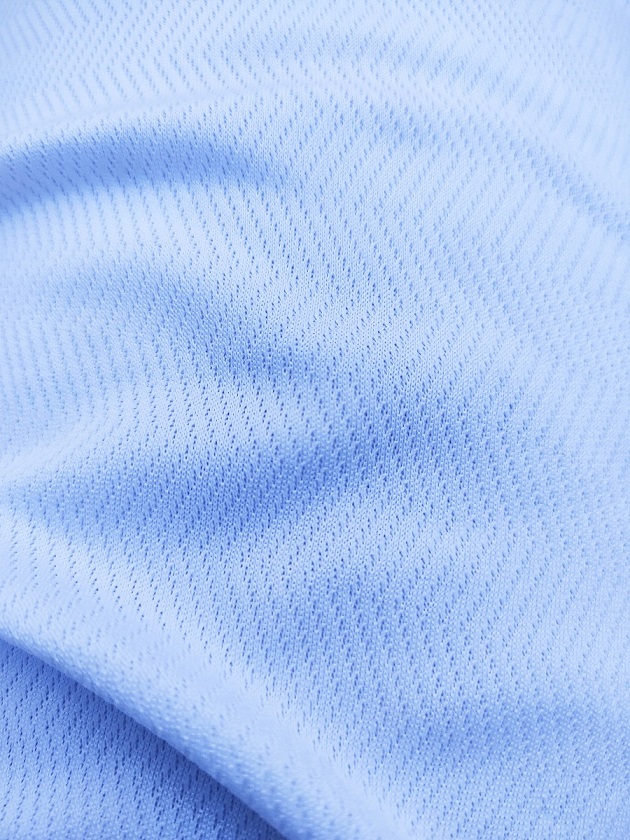
Coolmax® is a moisture-management textile technology. More precisely, it was developed to move moisture away from the skin toward the outer surface of the fabric making sportswear more comfortable during physical activity.
The objective is to drain perspiration efficiently, rather than trapping it against the body during exertion. Freshness and comfort across all seasons are central to the Coolmax® brand. A garment built from Coolmax® polyester is designed to keep the wearer cool and dry in warm conditions, while retaining warmth when it is cold.
At the fiber level, Coolmax® is a polyester composed of hollow fiber filaments. These filaments form microtubes that channel water away from the skin. When a water droplet enters a microtube, basic physics expels it outward automatically. The result is a breathable, lightweight, moisture-resistant fabric that is easy to care for and absorbs up to 13 times less water than nylon.
Coolmax® technology has gained solid recognition among consumers seeking technical moisture-management apparel. Its label strategy has been effective: a simple tag communicates performance credibly and justifies a higher price point compared to generic garments.
However, as the mass textile industry faces growing environmental pressure, Coolmax® has had to adapt. In 2024, Coolmax® effectively means “Coolmax® Ecomade.”
The brand’s core audience athletes and outdoor enthusiasts is increasingly aware of the environmental impact of their clothing choices. The polyester fiber at the origin of Coolmax® is now produced from PET bottles and 100% textile waste. Lycra claims a 25% reduction in CO2 emissions compared to conventional polyester production. This repositioning also allows the brand to target distributors focused on more sustainable product ranges.
In addition to Coolmax® Ecomade, Lycra has developed a broader range of green-labeled technologies: Natural Touch, Ecomade Pro, Ecomade All Seasons, and FreshFX.
Coolmax®’s move toward more sustainable values deserves recognition. Nevertheless, the core technology has inherent limitations worth examining.
In sportswear, Coolmax® fabric is valued for its quick drying and moisture drainage. However, it is a polyester and polyester carries a well-known drawback. It does not resolve the problem of bacterial growth and, as a result, odor retention. We have all experienced a sports garment that still smells of perspiration after multiple washes.
The limitations become more significant when Coolmax® is applied to motorcycle apparel. Many motorcycle garments combine Kevlar® with Coolmax® using the latter to manage the intense heat generated by Kevlar®. This partially addresses comfort. However, it introduces a critical safety concern: polyester melts at approximately 180°C. In a crash, the abrasion generates significant heat. The garment may offer abrasion resistance — but the polyester content risks melting directly onto the skin.
Moisture and heat management are therefore not automatically solved by synthetic fibers. Natural fibers cotton in particular also manage perspiration effectively. Cotton is hydrophilic and handles temperature spikes without the risk of thermal degradation under friction.
DuPont significantly advanced conventional textile science and the development of polymers. However, high-performance fibers still have considerable room to evolve. Combining the comfort advantages of cotton with structural abrasion resistance in a single, comfortable, jean-like layer also addresses moisture management without the drawbacks of synthetic-only constructions. That combination of properties has been in continuous development for seventeen years with ARMALITH.
*Required fields
Your information is processed by computer to allow ARMALITH to manage your request.
To exercise your rights in accordance with the law “IT and freedoms”, click here.